Thursday, 21 September 2006

The 'Pope', the 'Prophet' & the 'Peaceful'

Well, it was all over the news, and here are a few blog posts about it:

Piper offers 10 points on 'How Christians Should Respond to Muslim Outrage at the Pope's Regensburg Message About Violence and Reason'. His post does what it says on the tin (I do like that: his messages always tell you in the title what they're about!) - he outlines some of what was actually said by the Pope (something we don't hear in the Muslim critics' war cries), discusses it and gives some suggestions for how we should respond.

Rick Phillips, over at Ref21, posted a couple of interesting secular American opinion articles, notable of which was Anne Applebaum's after which Rick named his post: Enough Apologies! (I do feel like it's missing an 'already' - as in, 'Enough apologies, already!'. Yeah, like, watevver.) Good piece. Rick concludes, 'See - there still are real men in America, even if most of them are women.'

The first of these to post was I think Challies, with his aptly titled, "Who's reinforcing negative stereotypes?" which is about the non-reaction of those thousands of 'good peaceful' Muslims of which we're told, who complain that it is politically insensitive comments which reinforce violent stereotypes of Islamic culture/politics /Islam, but who don't complain as much about reality of violence within Islam. Which probably brings us back again to some of Piper's 10 suggestions on how we should respond.

Grace & peace.

Monday, 18 September 2006

Be a dolphin

Dave's got some great tips for freshers (and I'd say not only freshers) over here.

Monday, 11 September 2006

Glory Days

Some students asked me for a top 5 books for this term. That's a hard question (though I'm loving it) - usually different people need different books at different stages of life, thought and maturity. I'm still pondering it - at the time I only managed to say Cross-examined by Mark Meynell. Now I've definitely got another to add: Glory Days by Julian Hardyman.
[From the publisher review] You love to paint but Christian meetings fill up all your free time. You could cut it as a professional sportsperson but think missionary work might be a better use of your life. You’re interested in party politics but worry that it’s not much of a spiritual pastime.

Many believers subconsciously divide their lives into Christian activities (church, prayer, Bible study and evangelism) and everything else – the glory bits and the rest. Julian Hardyman shows that God is just as interested in our work and family, our hobbies and skills, our politics and sporting prowess, as the things we think of as spiritual.
Your suggestions on a top 5 books for students would be welcome in comments. Just bear in mind it's Fresher term and we're talking students from many different church backgrounds - I'm not necessarily asking for your top 5 books, or top 5 Christian classics. Current contenders apart from the 2 above are Let the Nations be Glad!, Out of the Saltshaker (which seems like the Marmite book on evangelism - love it & find it life transforming or hate it and know you're not Rebecca Manley-Pippert), Know & Tell the Gospel, Pure, A Call to Spiritual Reformation, Dig Deeper!, & God's Big Picture.

Saturday, 9 September 2006

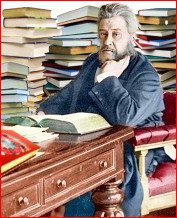
Bring the books!


Oh ok. I don't think I've referenced Pyromaniacs before. They're BIG in the reformed blogdom... anyway, that's irrelevant. Phil Johnson, who's the big cheese and original Pyromaniac, has quoted Spurgeon on Bring the Books! AMEN & woohoo!

Tick, tick, tick, bomb!

Just back from FORUM 2006: Ignition. It rocked. The gospel, faithful and challenging Bible teaching from Graham Daniels & Rico Tice, and around 500 student CU leaders, Relay workers and CU staff workers, a big top tent, lots of washing up, a whole evening of prayer for world mission, and an open mic night which rounded off with an incredible post-punk lyrical performance from Dan Peterson (new CUSW in Scotland).

I had a particularly nostalgic moment. My first time at FORUM, we sang 'There is a Day' [mp3] by the Fellinghams. It's an excellent song full of Scripture pointing us to long for the day when we'll see Jesus face to face and be like him (even if the fill-in 'oh yeah, o-oh yeah!' rather amused my friend & I). Then this FORUM, my first time as a CUSW, didn't we have Lou and Nathan Fellingham along to sing some new songs to us (including some from Lou's wonderful new album Treasure), and they sang 'There is a Day'. All it lacked was my friend struggling not to laugh at the Oh yeahs.
Oh yeah.
I would say things come round in circles, except they don't: history is linear, heading to the goal of being under one head, even Christ.

Things Of Note (or TON, not to be confused with Thon, which is tuna, in French) -

STUDENTS get great discounts on great books courtesy of a UCCF student card. GRADUATES get a special conference - to equip you to live for Jesus and speak for Jesus in the workplace - with The Don (Carson) and Stott speaking.

Dieu traqique

Si j'ai bien toute ma mémoire
Disait Dieu dans un coin du ciel
J'avais commençé une histoire
Sur une planète nouvelle, toute bleue
Bleue, pour ne pas qu'on la confonde
Je vais aller m'asseoir sur le rebord du monde
Voir ce que les hommes en ont fait

J'y avais mis des gens de passage
J'avais mélangé les couleurs
Je leur avais appris le partage
Ils avaient répété par cœur
«Toujours» ! tous toujours dans la même ronde
Je vais aller m'asseoir sur le rebord du monde
Voir ce que les hommes en ont fait

Je me souviens d'avoir dit aux hommes
Pour chaque fille une colline de fleurs
Et puis j'ai planté des arbres à pommes
Où tout le monde a mordu de bon cœur
Et partout, partout des rivières profondes
Je vais aller m'asseoir sur le rebord du monde
Voir ce que les hommes en ont fait

Soudain toute la ville s'arrête
Il paraît que les fleuves ont grossi
Les enfants s'approchent, s'inquiètent
Et demandent «pourquoi tous ces bruits ?»
Sans doute, Dieu et sa barbe blonde
Dieu qui s'est assis sur le rebord du monde
Et qui pleure de le voir tel qu'il est !

Dieu qui s'est assis sur le rebord du monde
Et qui pleure de le voir tel qu'il est.

- Francis Cabrel, 6/6/93
J'aime beaucoup la chanson française et j'adore ce CD de Cabrel qu'on m'a donné - Samedi soir sur la terre. Mais il faut dire, son idée de Dieu est triste. Il me semble qu'il a l'impression que ce monde est tragique, qu'il manque de sens («Est-ce que ce monde est sérieux ?»); et Cabrel projette cette image pour imaginer Dieu. Son dieu est impuissant et triste face au péché de l'homme. Il dit même (dans La cabane du pêcheur),
Y a sûrement quelqu'un qui écoute
Là-haut dans l'univers
Peut-être tu demandes plus qu'il ne peut ?
Mais pourquoi imaginer un dieu impuissant ? Si on reconnaît l'existance de dieu ici, c'est sûrement à cause de son création, qui manifeste son pouvoir ! Non, en ce cas, ce n'est pas principalement qu'on a oublié son pouvoir de créateur suprême - c'est parce que nous nous sommes élevés en comparaison - d'après nous - au niveau d'autorité ! En declarant fort notre liberté à faire du mal, nous imaginons que nous avons fait de dieu un impuissant. Ah, le pauvre dieu, il se perds un peu face à notre rébellion.

Euh, ramenons-nous à la réalité ? Genèse 3 ?

Si on reconnaît qu'il existe un dieu bon et créateur, et que nous sommes pécheurs, qu'il soit triste et impuissant est attirant. C'est tragique. On peut écrire des chansons au sujet. Ca n'aide rien, ni change rien, mais on sent un peu mieux. Pauvre dieu.

Mais un dieu bon et créateur, qui face aux pécheurs est puissant et fâché; de cela on n'écrit pas de chansons.

Gloire à Dieu tout-puissant qui nous a fourni un solution au problème de notre rébellion et sa colère, de lequel on peut bien chanter !
Jésus Christ... existant en forme de Dieu, n'a point regardé comme une proie à arracher d'être égal avec Dieu, mais s'est dépouillé lui-même, en prenant une forme de serviteur, en devenant semblable aux hommes; et ayant paru comme un simple homme, il s'est humilié lui-même, se rendant obéissant jusqu'à la mort, même jusqu'à la mort de la croix.

C'est pourquoi aussi Dieu l'a souverainement élevé, et lui a donné le nom qui est au-dessus de tout nom, afin qu'au nom de Jésus tout genou fléchisse dans les cieux, sur la terre et sous la terre, et que toute langue confesse que Jésus Christ est Seigneur, à la gloire de Dieu le Père.
- Philippiens 2:5-11

Friday, 1 September 2006

Flemish mayor bans French

The mayor of Merchtem, Belgium, has just banned French from being spoken in schools in the region.

Mais pourquoi ? Maar waarom ?

This is understandable and will help integration. Belgium has 3 federal communities - Flanders (north, near the Netherlands, speaking Flemish), Wallonia (south, near France, speaking French), and Brussels (middle, supposedly bilingual, in effect 85% French speaking). Merchtem is in Flanders. The schooling is of course given in Flemish, and with a fair number of francophone Belgians settling in the area, he wants to preserve the Flemish culture of the schools and ensure that the francophone children integrate rather than forming a francophone sub-community within the schools.

This is petty and seeking votes. The Flemish currently resent Wallonia because Flanders is currently economically stronger, and resent the Walloons for settling in Flemish towns and francophonising them - the communes [think local council regions] in & around Brussels are the particular sore point. So a strong line for Flanders does well in elections. Next communal elections? October.

Two sides to any story eh?

Meanwhile, the British government is providing council literature (health care, schooling, etc.) in immigrant languages so that they don't have to learn English and integrate. In Belgium, English is frequently the solution - the neutral language everyone learns and speaks well so they can communicate between the official languages. In England, it seems English is the problem - the official language no-one learns and speaks well...

But perhaps it's the reverse culture shock speaking.